

Customer Success in the Economy Is No Longer Optional
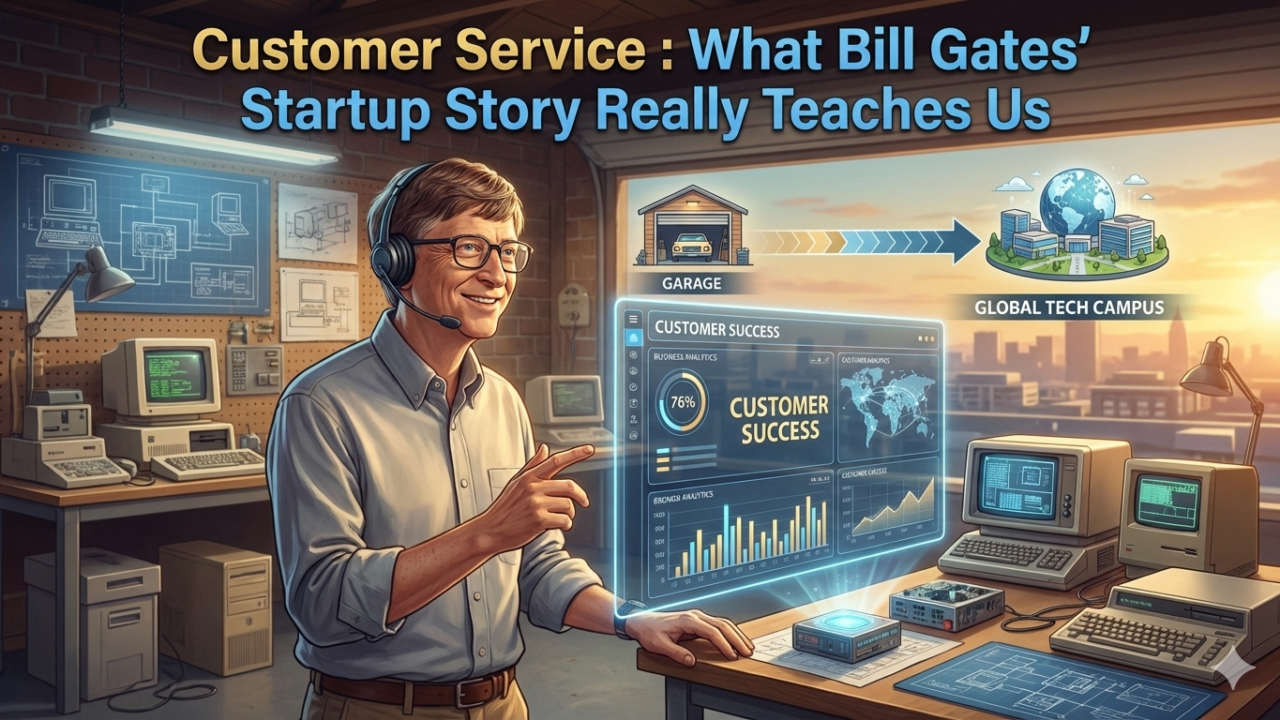
When Bill Gates revealed that he worked a customer service shift at his daughter’s startup, the story quickly caught attention online. However, beyond the family moment lies a deeper lesson about business today.
Customer success has become one of the most powerful drivers of innovation, growth, and stability in the modern economy. Companies no longer compete only on technology or price. Instead, they win by listening to users, solving problems quickly, and building long-term trust.
In short, customer success in the economy is now a strategic necessity.
Why Bill Gates’ Gesture Matters for Business Leaders
Phoebe Gates’ startup, Phia, uses artificial intelligence to help shoppers compare clothing prices across tens of thousands of websites. While the technology is impressive, Bill Gates chose to focus on something else: the customer experience.
By answering real support calls, he gained firsthand insight into:
- User frustrations
- Feature requests
- Technical breakdowns
- Trust issues
- Buying behavior
As a result, this approach reflects a growing trend among executives who want data directly from customers rather than filtered reports.
The Evolution of Customer Service into Customer Success
Traditionally, customer service was treated as a cost center. Today, that mindset is changing rapidly.
Modern customer success teams influence:
- Product development
- Customer retention
- Brand loyalty
- Market differentiation
- Crecimiento de los ingresos
Because digital businesses depend heavily on subscriptions and recurring users, keeping customers happy is often more profitable than constantly chasing new ones.
Therefore, investing in customer success improves both margins and reputation.
How Customer-Centric Companies Strengthen the Economy
On a broader scale, companies that prioritize customers contribute to healthier markets.
Strong customer success strategies:
- Increase adoption of new technologies
- Reduce friction in digital transactions
- Improve accessibility
- Strengthen consumer confidence
- Speed up innovation cycles
Consequently, these factors create productivity gains that ripple through entire industries.
From fintech and healthcare to AI platforms and e-commerce, customer success acts as a bridge between complex systems and real-world needs.
Leadership Is Moving Closer to the Front Lines
Bill Gates’ involvement illustrates another major shift in management philosophy.
Today’s executives increasingly:
- Read customer tickets
- Join onboarding sessions
- Track satisfaction metrics
- Speak directly with users
- Use frontline insights to guide strategy
This hands-on leadership style helps companies avoid blind spots. More importantly, it ensures decisions are grounded in reality rather than spreadsheets alone.
In the digital economy, distance from customers is a serious competitive risk.
The New Generation of Entrepreneurs Understands Customer Success
Phoebe Gates and her co-founder represent a new wave of founders who view customer success as core to their mission.
Young startups now treat user feedback as a growth engine rather than a support afterthought. They iterate quickly, communicate transparently, and design products around real behavior.
Because markets are crowded and technology is easily copied, customer experience often becomes the true competitive advantage.
Why Customer Success Is Becoming a Major Economic Force
When you zoom out, Bill Gates answering phones for a day becomes symbolic of a much larger transformation.
Value creation in the modern economy increasingly depends on:
- Helping customers achieve outcomes
- Removing friction
- Designing human-centered systems
- Turning feedback into rapid innovation
- Building trust at scale
Customer success sits at the intersection of all these forces.
That is why analysts, investors, and policymakers alike are paying closer attention to how companies manage relationships with their users.
Final Thoughts: The Future Belongs to Customer-Focused Businesses
What began as a personal anecdote now feels like a case study in modern capitalism.
Customer success is no longer a support function. It is a growth strategy, a leadership philosophy, and an economic accelerator.